Aura
Know your health. Own your care.
Designing an AI-native conversational assistant inside a patient portal - so anyone can understand their records, make sense of a visit, and feel in control of their own care.
Passion Project
AI Native
Lead Product Designer
Web · iOS

Problem
A patient leaves their doctor's appointment. They log into their portal to review what was discussed. They find a PDF discharge summary written in clinical shorthand, three lab results with values they can't interpret, and a medication update with no context. They close the tab.
This is the defining failure of every patient portal in use today. They were built to give physicians documentation infrastructure - patients were an afterthought. The result is a system where access to information exists, but comprehension does not.
80%
of medical information patients receive during a visit is forgotten immediately after leaving
50%
of what is retained is remembered incorrectly - wrong doses, wrong follow-up timelines
9 in 10
adults have difficulty using everyday health information when presented in clinical language
Tools like Abridge, DeepScribe, and Nuance DAX are solving documentation for physicians - and doing it well. Oracle Health recently announced AI in their patient portal for record Q&A. But no product has yet designed this experience from the patient's perspective first - with the interaction design, trust signals, and plain-language guardrails that a non-clinical user actually needs.
The physician-side ambient AI problem is largely being solved. The patient-side comprehension problem hasn't been seriously designed yet. That's where Aura sits.
Research
Research spanned 2 methods:
Contextual inquiry with 3 participants navigating their real portals (MyChart, athenahealth, a regional hospital system) while thinking aloud.
Competitive UX audit of other health portals like MyChart.
They don't know what they don't know
Patients can't query what confuses them - they lack the vocabulary. The AI needs to surface what matters without waiting to be asked.
AI trust is fragile
"Is this from my chart or did it make this up?" Source transparency isn't a feature - it's the foundation.
Post-visit = peak anxiety
The 24-48 hours after a visit is when questions peak and answers are hardest to find. The highest-value moment for AI.
Patients want to know what to do
Understanding what happened isn't enough. "What should I watch for?" "When do I call?" These are the real questions.
Language is the barrier, not tech
Portals aren't hard to use - the content inside requires clinical literacy most patients don't have.
Strategy
The strategic framing for this feature starts not with what to build, but with what to protect against. AI in healthcare carries specific failure modes that erode trust catastrophically - naming them first is what keeps every subsequent decision grounded.
Show your sources, always
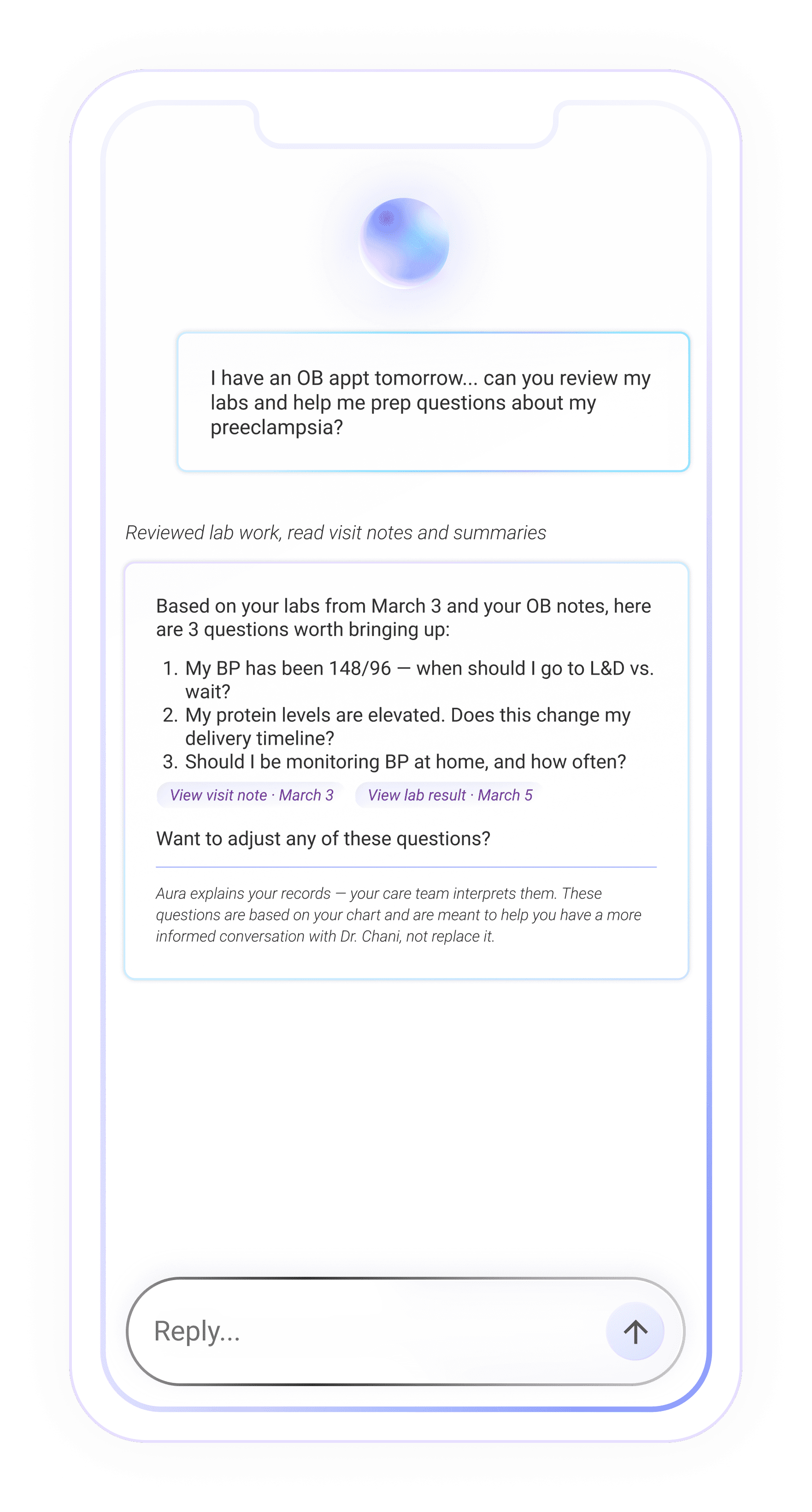
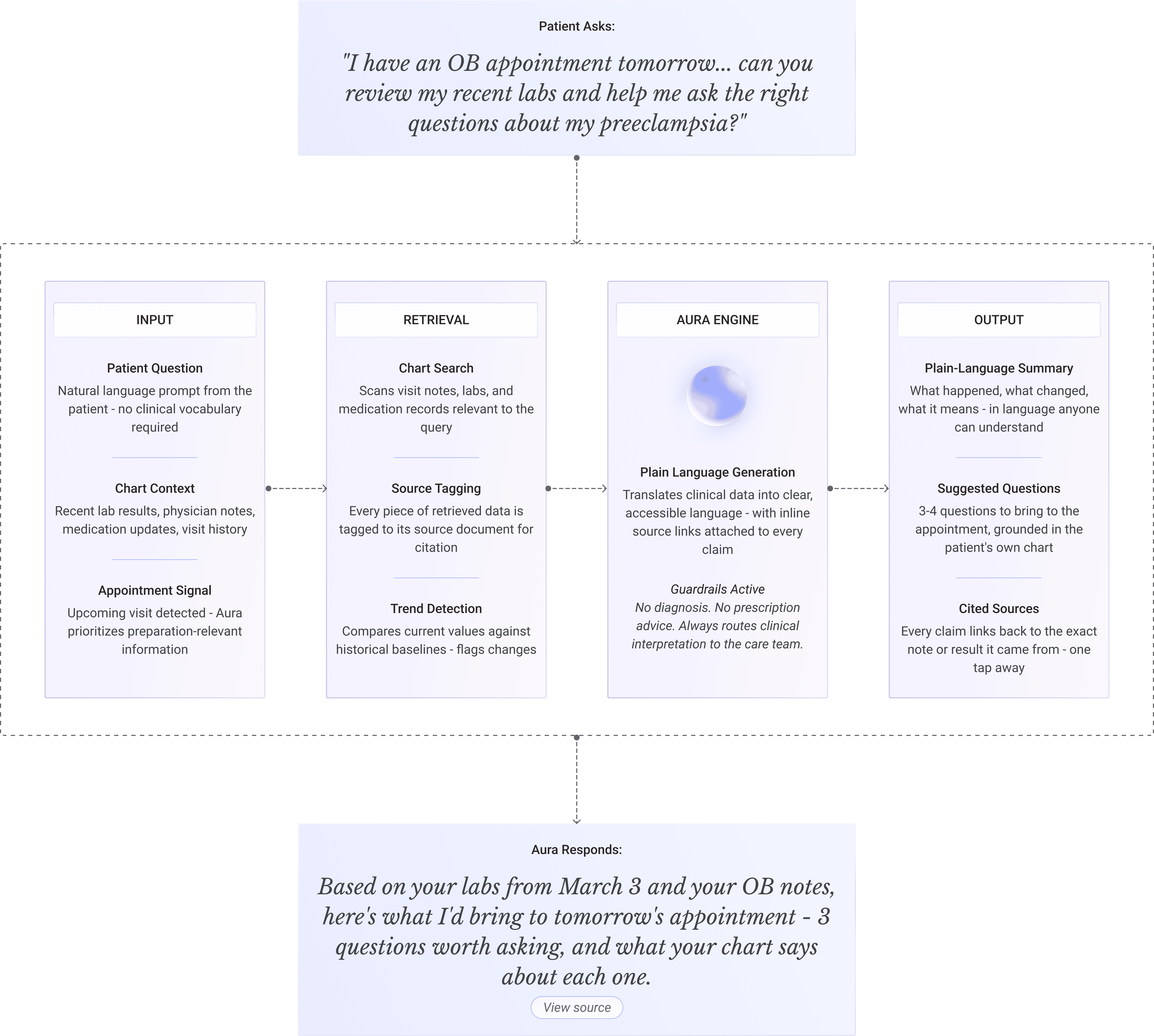
Every AI response is anchored to a specific document, lab result, or visit note from the patient's own chart. No answer exists without a citation. Patients can always see exactly where the information came from.
Never diagnose, never prescribe
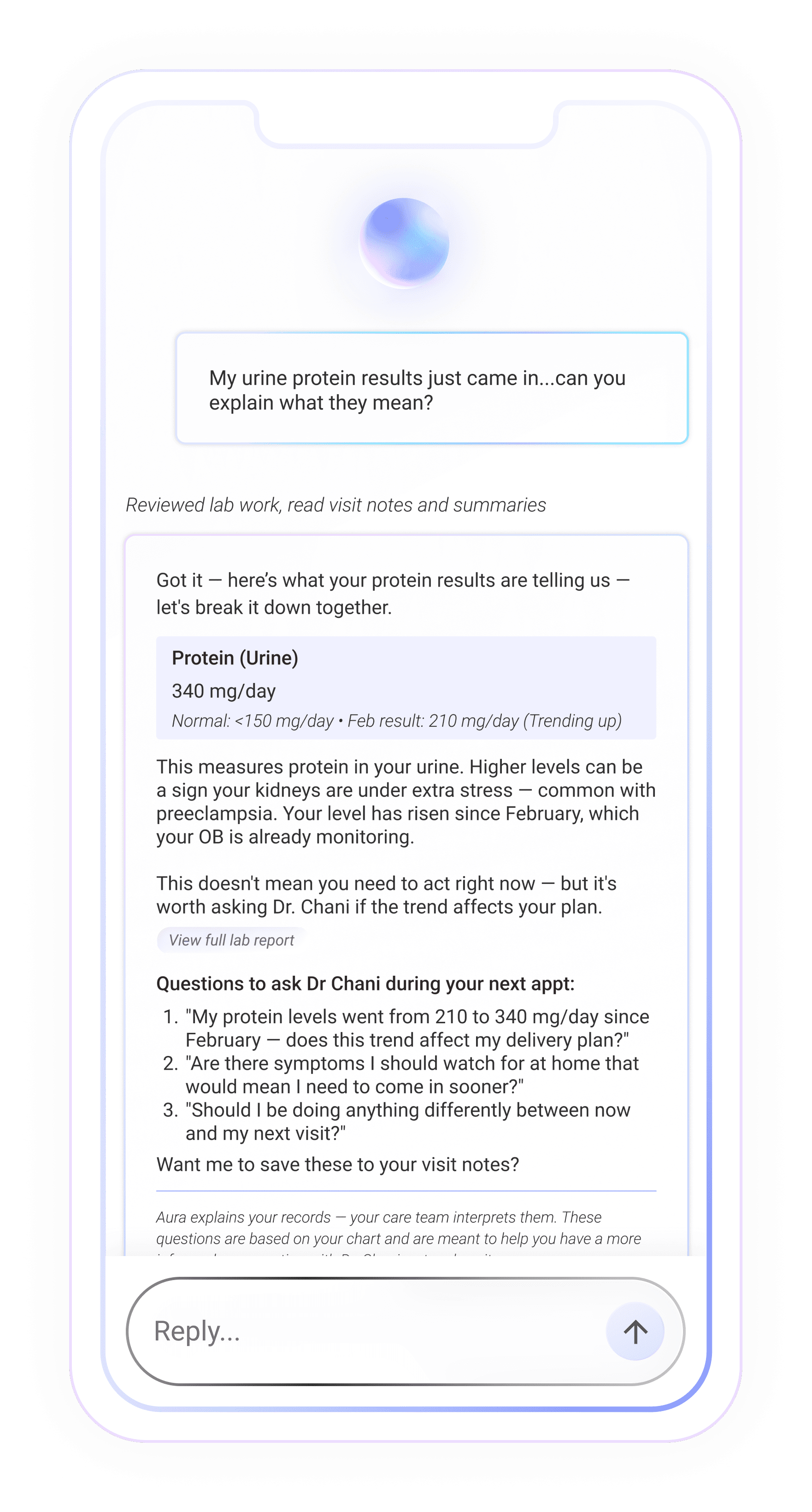
Aura explains and contextualizes - it never interprets symptoms into diagnoses or suggests medication changes. The guardrail is hard and always visible. "This is what your chart says. Your doctor is the right person to interpret it."
Proactive, not passive
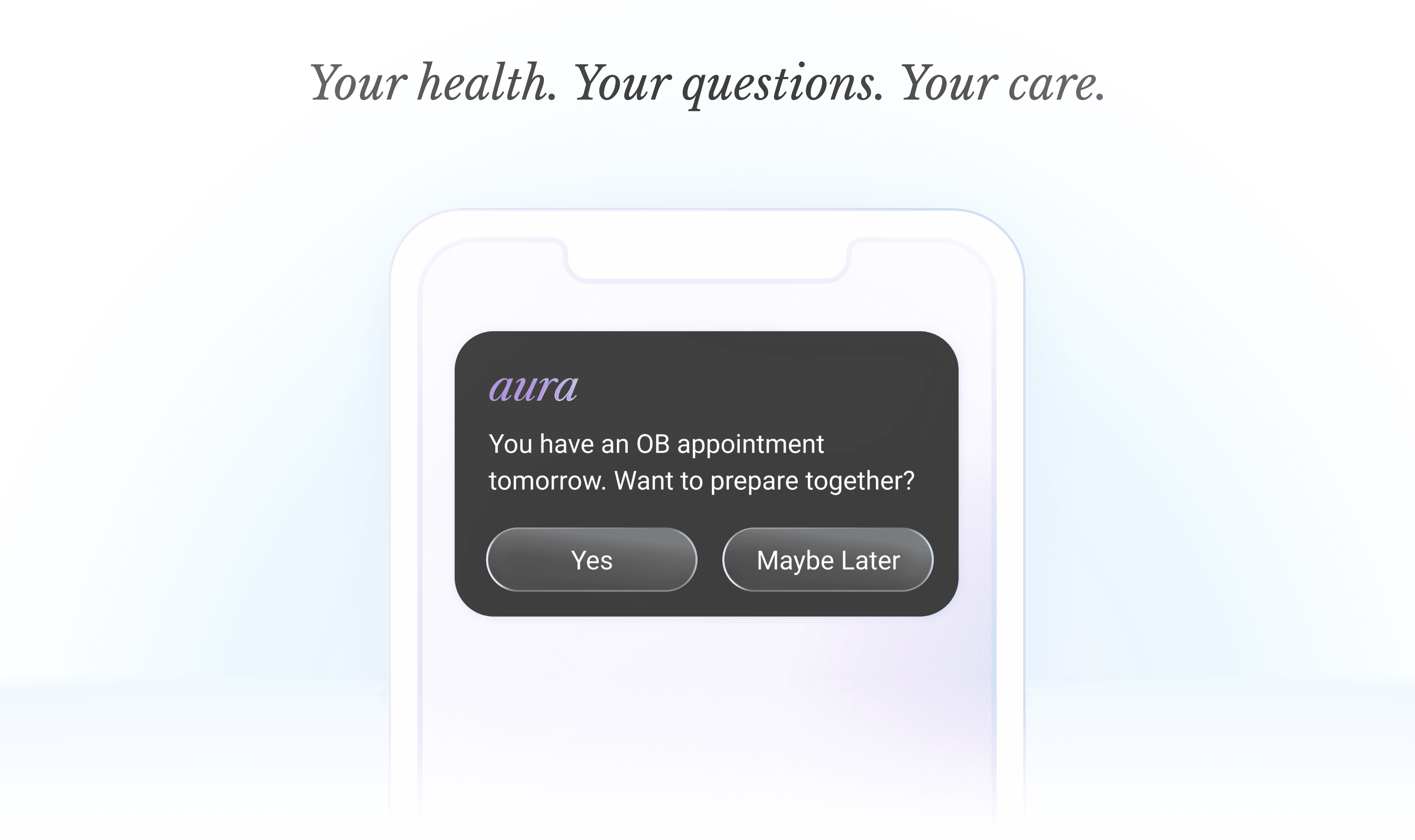
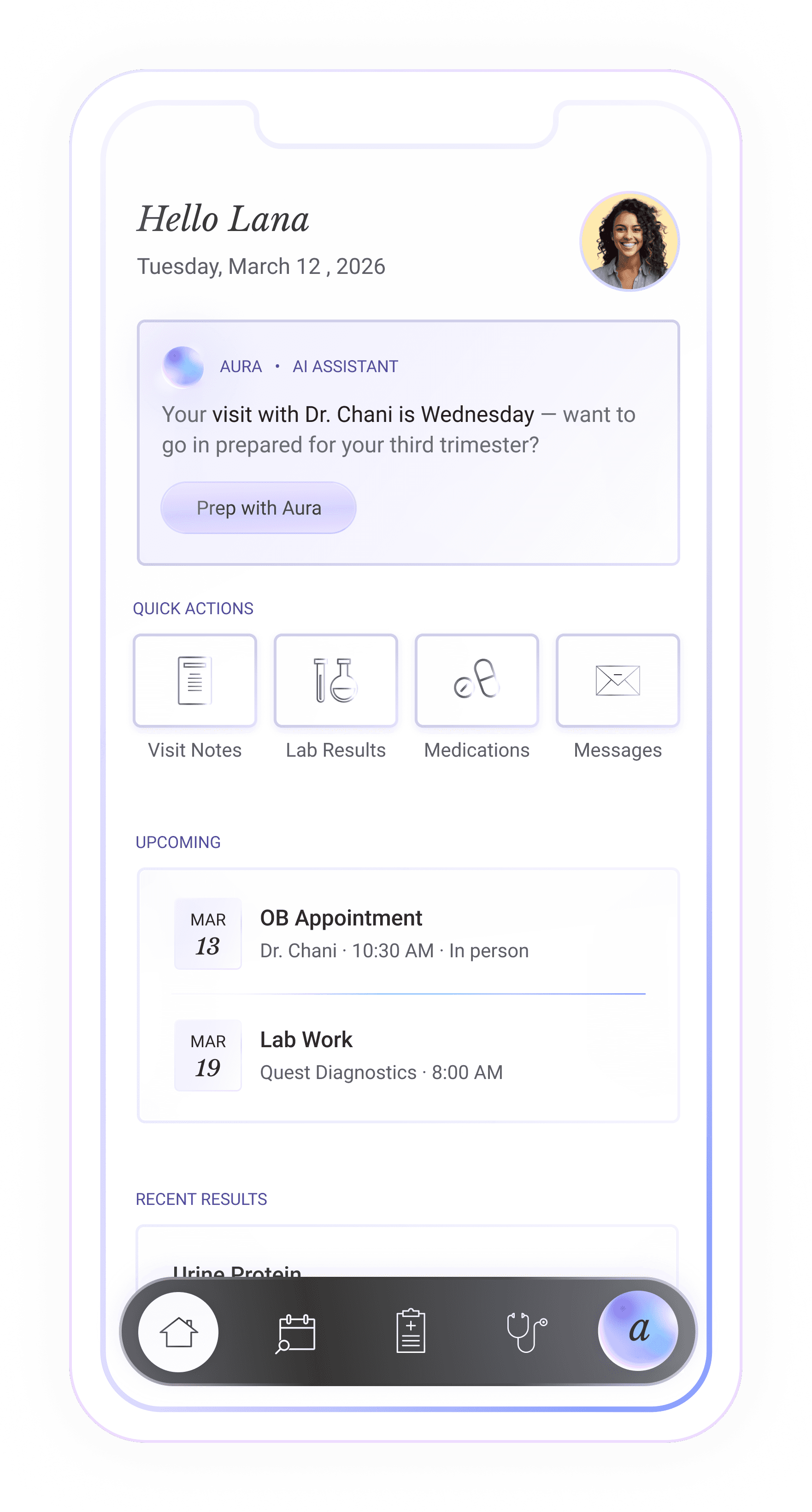
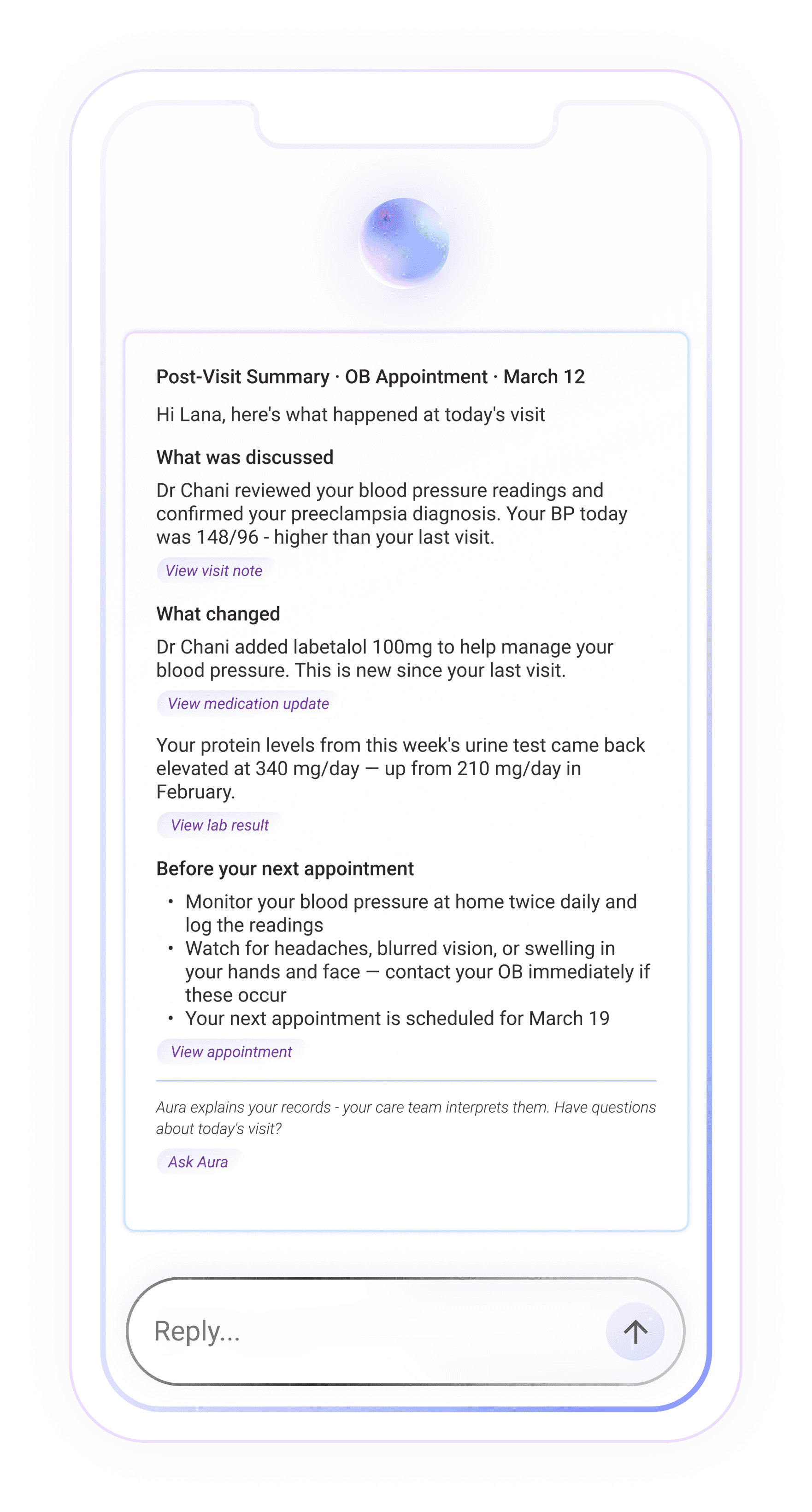
Don't wait for patients to ask. Surface what's new, what changed, what needs attention - especially in the 48 hours after a visit. The assistant should feel like it's looking out for you, not waiting to be interrogated.
Meeting patients where they are
Not everyone has a clinical background, and they shouldn't need one. Aura translates medical language into plain terms, so every patient - regardless of education or experience - feels informed, not overwhelmed.
Human escalation is always one tap away
The AI is not a replacement for a provider. Every interaction has a visible path to message your care team, find urgent care, or call the office. Aura augments the relationship with your doctor - it doesn't substitute for it.
Conversational chart Q&A
Ask anything about your records in plain language. "What did my doctor say about my blood pressure?" "When was my last tetanus shot?"
Post-visit AI summary
After each visit, Aura surfaces a plain-language recap: what was discussed, what changed, what to do before the next appointment.
Lab result plain-language explainer
When a new lab result arrives, Aura explains what it measures, what your result means in context, and flags if anything is outside your personal baseline.
Proactive visit prep
Before an upcoming appointment, Aura surfaces questions you might want to ask based on recent results and open items from your last visit.

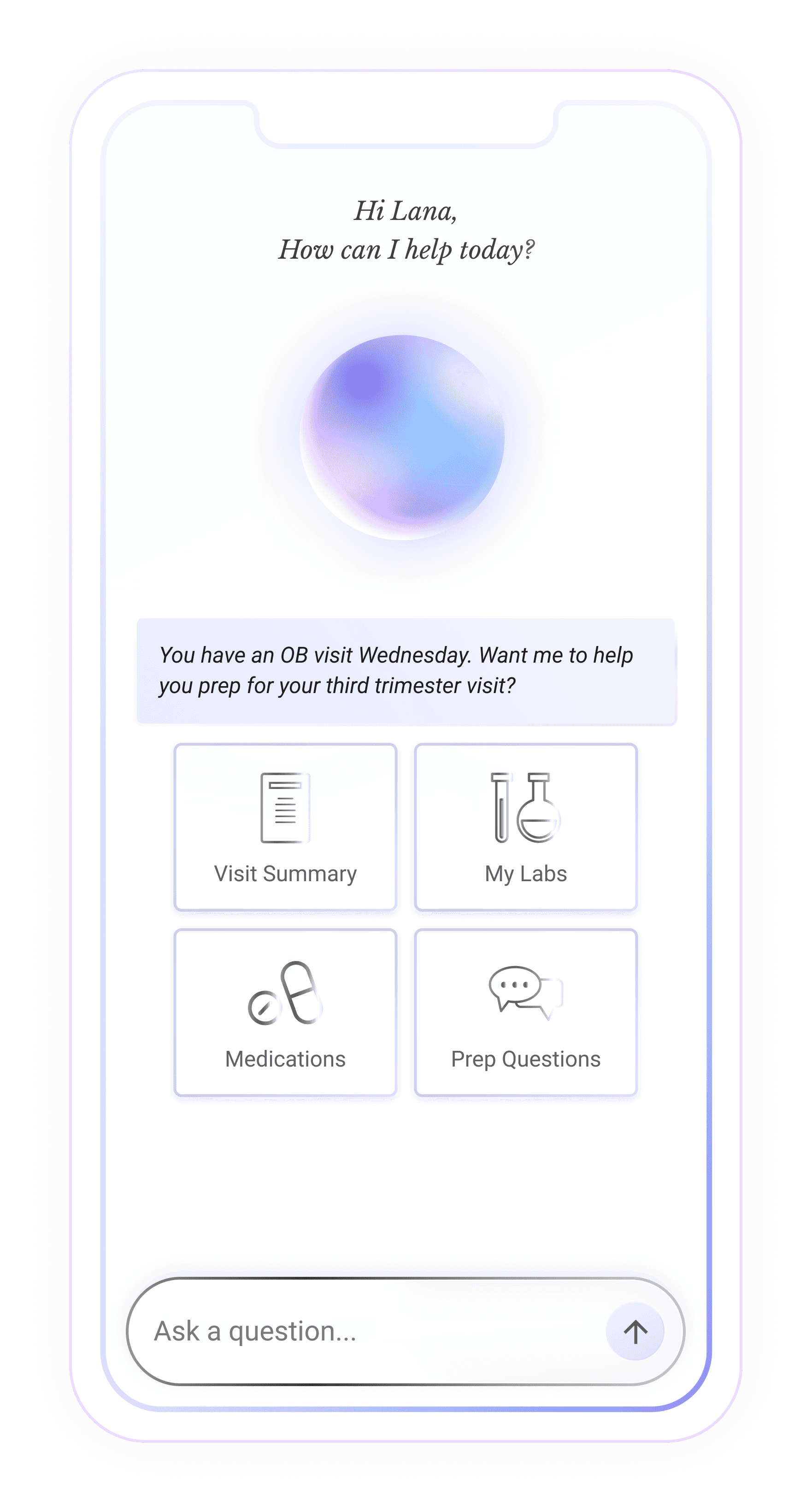
I used AI as a live research partner to explore UX best practices for designing AI agent experiences - querying patterns around trust, transparency, progressive disclosure, and human-in-the-loop interaction in healthcare contexts. It helped me build a principled foundation before touching any interface.
In the early stages, I used AI to rapidly explore how existing products surface health information to patients - generating a wide range of interaction models and entry point patterns to pressure-test assumptions before committing to a direction. It compressed weeks of exploratory thinking into focused working sessions.
The hardest design problem was the copy - how does Aura communicate its limits warmly, not defensively? I used AI to generate and compare dozens of variations of guardrail language, empty states, and response tone until the voice felt human enough to trust. That's the kind of iteration that's nearly impossible to do manually at speed.
Designing for trust is designing for language.
The visual design of the AI was the easy part. The hardest, highest-impact work was getting the copy right - every word Aura says either builds or erodes confidence.
Guardrails are a design problem, not a legal one.
Every AI health product needs limits - but how those limits are communicated determines whether patients feel protected or dismissed. The boundary is necessary. The tone is a choice.